Number 1 Exercise and diet Book on the Internet. Click Here To Learn More
Fat Loss for Idiots 

Archive for the “exercises” Category

weight-benchGetting started in weightlifting means that you will probably need some weight lifting equipment. Hopefully you have been looking around for this but I will try to give you a good idea of the equipment that you will need.

First of all there are two kinds of equipment for weight training. There are weights and bars and there is equipment that will help you to use those weights and bars.

Weight training equipment – Weights and Bars

In looking for weights and bars it is a good idea to have weights that will work on short bars (like for one armed curls) as well as on longer bars (for two armed curls or bench press). I have always tried to have a variety of weights from 2.5 pounds to 10 pounds and I have bought metal weights instead of those crappy plastic ones as they take a lot less space. Read the rest of this entry »

If you're new here, you may want to subscribe to my RSS feed. Be sure to find out how you can change your life with the Free Fitness program.

Looking to make a change and lose some weight? I have reviewed the top diet on the internet and you can go and read over 200 comments people have made about why this diet has worked well for them, as well as some of the problems.

Tags: exercises, Fitness Equipment, guard, metal weights, weight lifting equipment, weight training equipment, working out

Comments 5 Comments »

bench-pressThe world will never agree on the best bench press workout to get you stronger in the fastest time possible. Advanced lifters use an in-depth training system which includes bench press bands and chains for greater resistance. They are effective but may be rather complicated for a person entering the bench press world for the first time. Also bear in mind that just because another method is simpler, i.e. not involving chains and pads, doesn’t mean that it’s not as effective. It is! It’s just different.

So let’s get to it.

Bench Press Technique

Firstly, getting the correct technique is vital. You are going to be lifting larger and larger weights as time progresses and it is absolutely essential to get the right technique to avoid future injury. So, you need to use good leverage and be stable to bench press more weight. Lie down flat on the bench and using your middle fingers, hold the bar over the engraved lines. Gently shimmy up the bench so your chest is under the bar which is still on the rack at this stage. Steady your feet firmly on the floor and raise your shoulders away from the bench. Read the rest of this entry »

Comments 2 Comments »

There many different forms of shoulder exercise and it is hard to pick out one and say that it is the best. Considering that the shoulder is only a small area and the deltoids are not large muscles, it may seem surprising that there are so many different exercises to choose from. However, the shoulder does have a wide range of movement and this is why its supporting musculature is so complex.

For this reason it is important to vary the exercises that you do. Otherwise you risk ending up with unbalanced muscular development which not only looks weird, it also gives you a high risk of injury because the muscles that you have not developed will be too weak to support the developed musculature.

So here are some of the basic exercises that you can do at home to develop your shoulders. The exercises can be performed either seated or standing. Try to mix it up unless you have problems staying balanced while standing.

You will need dumbbells and either a straight back chair or stool to sit on when you are performing seated shoulder exercises. Be sure that whatever you choose to sit on, you can have your feet flat on the floor while maintaining a straight back and staying well balanced.

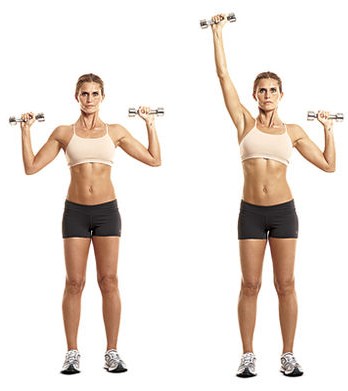
- Dumbbell Shoulder Press. Raising overhead. You can raise the weights either both together or singly.

- Lateral Raises. Raising out to the side to shoulder height only.

- Front Raises. Raise one at a time out to the front with a straight arm. Again to shoulder height only. Lower, then raise the other arm.

- Arnold Press. Start with palms facing you at shoulder height and raise to just above head height, twisting as you go so that the palms are facing outward at the top. Lift either both together or singly.

If you have a barbell at home or have access to a gym, you can add the Military Press, lifting the barbell overhead or using a shoulder press machine. There is a difference in the way that the shoulder has to work with dumbbells and barbells so you will benefit from using both if they are available to you.

You should warm up before beginning to exercise. A good way to warm up the deltoids is to perform each exercise with only half your normal weights for the first couple of reps.

Form is very important in all dumbbell exercises. Take it slow in all cases. If you don’t, you will miss out on a lot of the definition that you might have had. Breathe out while exerting, and be sure that your elbows and other joints do not move out of line during your shoulder exercise.

Tags: Arnold Press, Dumbbell Shoulder Press, straight back chair

Comments 3 Comments »

There are many reasons why a person might want or need to start a program of neck exercise for strengthening the neck. If you are bodybuilding, a strong neck is important for prevention of injuries in this vital and vulnerable area. It is also important for appearance, being even more visible than the arms when fully clothed.

Neck strengthening is particularly important for sports players, especially in contact sports such as boxing, wrestling, football, etc. Neck injuries in these sports can be disastrous, causing paralysis or even death. You might also want to strengthen the neck because of a previous neck injury.

The neck is a complicated area of human anatomy and there are four main muscle groups which both support the head and allow it to move in all directions. These are:

- Rotators, so that you can turn your head and look over your shoulder

- Flexors, so that you can look down, moving your chin toward your chest

- Extensors, so that you can tip your head back, looking up at the ceiling

- Lateral Flexors, so that you can tilt your head sideways, moving your ear toward your shoulder

The action of all of these together means that you can move your head around in any direction that you want. They all need to be flexible to maintain your range of movement, and strong to help prevent potentially fatal injuries.

Before trying any neck exercise keep in mind that the neck is a very delicate area and you must take care not to strain it. Start with very low resistance in each case. You should always consult with a doctor before starting any exercise program and check that the exercises are suitable for you.

Rotators can easily be strengthened by simply placing the hand against the head to provide resistance while you turn your head to the limit of your range of motion, first to one side then the other. Keep the head straight. Slowly increase resistance when your head is turned as far as it can.

The easiest way to strengthen the other 3 muscle groups together is to use a 4-way neck machine which you can find at many gyms. Other gyms have a simple headstrap device which is not so effective because the headstrap generally only works the extensor muscles.

If your gym does not have a 4-way neck machine you can use the headstrap for the extensors. Most gyms will have a headstrap or you can purchase one. You can also find exercises for the flexors and lateral flexors using the headstrap or a towel etc to provide resistance.

The secret in each case is to find an exercise that provides resistance while you move your head in the appropriate direction. Remember always to start with low resistance when you begin any neck exercise.

Tags: Boxing, contact sports, fatal injuries, football, head, headstrap device, neck injuries, paralysis, sports players, wrestling

Comments 2 Comments »

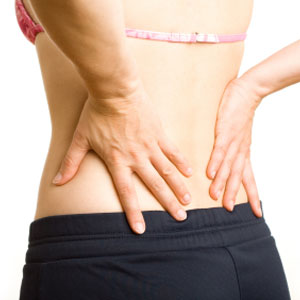
Many people looking for core strength neglect lower back exercise while focusing on the abs. This is a huge mistake as the muscles of the back are vital for core strength. If you are undertaking any kind of workout program or even for normal day to day life, the back must be strong to avoid back injuries.

The first thing to say when we consider lower back exercises is that especially if you have current back pain or a recent injury or medical condition you should consult with your doctor or physiotherapist before undertaking any exercise program. While gentle stretching and controlled movement is generally good for healing back injuries, intensive exercise is usually better postponed until your pain is gone. Also, there are many causes of back pain and some require more rest than others.

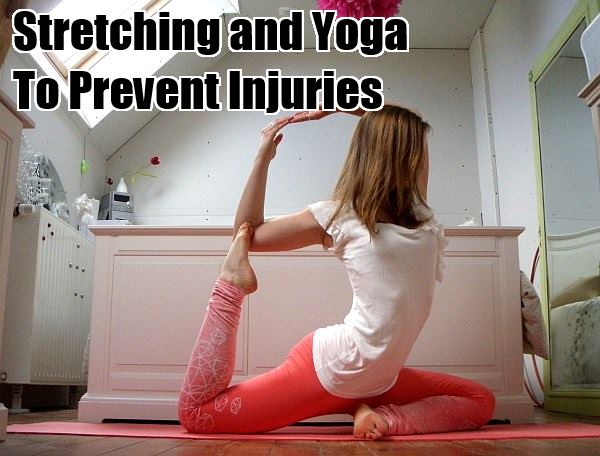
Assuming you are fit and well, there are a number of exercises that can be undertaken to improve your lower back strength. Some of the best of these are included in the series of stretches and poses known as yoga.

Many of the forms and postures in yoga training are perfect for improving the flexibility and strength of the back. There are many different muscles in the back and if any of them are neglected, as they often are if we do not perform regular stretching exercises in all directions, they become tight. This can lead to distortion of the spine (causing back pain) or injuries when these neglected muscles are suddenly called into action.

If you do not want to join a yoga class, you can perform these same exercises at home. Find a yoga DVD that includes the poses that you need. If you are looking online, searching for the Indian names of the stretches or poses (called asanas in yoga) makes them easy to find. Look for the following stretches or postures:

- pelvic tilt (not strictly a yoga pose but you will find it on many yoga sites)

- knee to chest (pawanmuktasan)

- supine twist (supta matsyendrasana) or half spinal twist (ardha matsyendrasana)

- cat (marjariasana)

- cobra (bhujangasana)

- downward facing dog (adho mukha svanasana)

It is important to do them all because they have different and complementary actions on the spine. In other words, they balance each other out.

Move into each position slowly and be sure to follow all of the instructions, noticing especially the correct position of your head. You can hold each position for 2-3 minutes. You will probably find that you can comfortably increase the stretch once or twice while you hold, as your muscles become accustomed to the pose.

Do not expect to be able to do the pose to the full extent demonstrated by the teacher. This is especially true if you are more muscular than the teacher or others in the class. A muscular body will be less flexible. There are also differences between the sexes in how far they can stretch in certain poses. That is natural and nothing to be concerned about. Yoga is not a competition, it is just about increasing your own flexibility within the range that you have.

Keep in mind that yoga exercises should never stress the muscles or the spine. Do not try to stretch to your limits. You should be able to breathe freely without constriction at all times during your lower back exercise program.

Tags: back injuries, back pain, pain, physiotherapist, teacher

Comments 2 Comments »

If you neglect your leg workout in your bodybuilding routine, you are sure to regret it. Why? Because you will end up looking like a popsicle, with a chunky toned upper body and chicken legs. So unless you plan never to take off your jeans, be sure to include leg workouts in your program.

When you work out your legs properly, you can expect to feel a little dizzy or even nauseous at the end of your session. This is because although you may think of them as adjoined limbs, when you work out your legs you involve half of your body or even more. You will be training the glutes and the muscles around the hip and working the heart pretty hard. So the benefits are more than just toned calves and thighs. You can burn fat and increase your cardiovascular strength too.

There are four main sets of leg muscles or tendons that you need to focus on. These are the quadriceps or quads (front of thigh), hamstrings (back of thigh), calves (back of lower leg) and gluteus or glutes (buttocks). You do not necessarily have to work them all every day but be sure not to neglect any of them entirely or you will have problems.

1. Exercises for quads and glutes

The standard barbell squat is a great exercise for both quads and glutes. Resting the barbell firmly behind your head on the trapezius muscles and shoulders (not on the neck), start by bending forward slightly and only then bend the knees to bring your butt down toward the ground. Keep the knees pointing straight ahead and move slowly. Stop when thighs are parallel to the ground and begin raising back up. Again check that the hips and knees are firm with no sideways movement.

2. Exercises for calves

Calves are a challenge and you will need to work on them in a focused way at least three times a week to see results. Your exercise is the calf raise but you should vary the way that you perform this so that the calf can develop fully. Seated and standing are obvious variations but you can also turn the feet slightly inward or outward and work either both legs together or one at a time.

3. Exercises for hamstrings

The hamstrings are tendons rather than muscles and the important point here is to keep them flexible and strong so that they are not strained when put under stress by the developing strength of your other leg muscles. Do hamstring stretches such as a single straight leg raise (lying on your back) or leg curl.

It is always best to consult a doctor before starting on any exercise program, including a leg workout.

Comments 2 Comments »

Knee exercise is vital if you are suffering from the painful condition of arthritis in the knee joints. The right kind of exercise can help to maintain or possibly even increase your range of motion, which helps to prevent the knee from causing sudden acute pain or giving way. Exercise helps to maintain healthy cartilage. It is also important to build strength in the muscles and tendons that support the knee, so that you avoid putting unnecessary stress on the joint itself when you walk, climb stairs etc.

Exercise To Strengthen The Knee

Choose a chair the right height so that you can sit on it with your feet flat on the floor and thighs horizontal. Consciously tighten the muscles in the right thigh (it can be helpful to put your hand on your thigh at first to feel the muscles tighten). You should see your kneecap move a little.

Then push out with your heel, point your toes and move your toes around in a slow circle. Continue for up to 30 seconds, then repeat with the other leg.

Do not let your knee fall away to either side. It must stay in a straight line with your leg. Read the rest of this entry »

Tags: arthritis, chair, pain, Swimming, Tennis, volleyball

Comments 7 Comments »

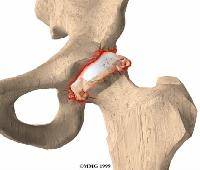
Hip exercise is a very important part of pain management for anybody with arthritis in the hips. It is also probably the best way to limit the development or worsening of arthritis in all joints.

Many exercises for the hips will also strengthen the knees which is important because arthritis in these joints is often linked. A person with stiff and painful hips will tend to put stress on the knees when walking to reduce their pain, and this stress can often produce problems of its own including causing arthritis to develop in the knees too. The same is true in reverse, when someone causes problems in their hips because they were trying to ’save’ their arthritic knee joints.

There are three types of exercise that you can do for arthritic hips: stretching, strengthening and reduced-impact aerobic exercise. Try to do a variety including all three types, spread over several days. It is fine to do a longer exercise period some days and a shorter one other days, but it is best to take some form of exercise every day.

Stretching Hip Exercises

Try to do some stretching every day, because these exercises should help you with important daily activities such as sitting, getting in and out of a car and putting on shoes. Never force a stretch further than is comfortable. Keep in mind too that you may need help getting up off the floor.

1. Bent Leg Raise

Lying on your back, slowly raise one knee, sliding your foot along the floor. Bring your foot as close to your buttocks as you comfortably can. Then lift your foot and bring your knee up towards your chest. If this is difficult you can pull with either your hands around your thigh (not around the knee) or a belt.

Hold for a count of 5 then return the foot to the floor and slide it back until it is stretched out again and relaxed. Repeat with the other leg. (5 times)

2. Bent Leg Raise With Rotation

Repeat the leg raise but while the knee is in the air, rotate it inward (toward the other hip) and back to an upright position. Again you can support the thigh if that helps. Rotate the knee slowly 5 times, then do the other leg.

Strengthening Hip Exercises

1. Straight Leg Raise

Lie on your back with knees up and feet flat on the floor. Tighten muscles in your right thigh and raise the right foot, straightening the right knee as far as you comfortably can. Keep the foot 1-2 feet off the ground, not more, and do not arch the back. Hold for a count of 10, relax and repeat with the other leg. (2-5 times)

2. Foot Roll

Stand 1-2 feet from a counter with legs apart and hands leaning on the counter. Standing on your heels, lift the toes and slowly turn them so they point first inward, then outward. This should cause the whole leg to rotate inside the hip joint. (5-10 times)

3. Backward Leg Raise

Still supported by the counter, raise one leg up and back. Keep the knee straight. Hold for a count of 5. Repeat with the other leg. (5 times)

Reduced Impact Aerobic Exercises

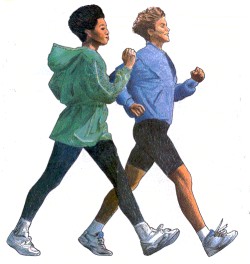
Avoid high impact aerobic exercises like running, skipping etc if you have even mild arthritis. The impact of the body hitting the ground can be very stressful for the joints. If you like walking, walk on a softer surface such as grass rather than on the street wherever possible. Better still, go for low impact aerobic exercise such as swimming or stationary cycling.

Do not stress your hips. Stop if you feel any sharp pain or if your hips or other joints begin to ache differently than your normal resting pain. Do not expect to see improvement in a very short time but begin gently and increase gradually.

Many people will have a reduction in their pain within a week or two. If you do not feel any better, you may need to see a physiotherapist who has access to your radiography results so that they can pinpoint where your problems lie. In some cases where the arthritis is worsening, exercise may not relieve pain but it will prevent it getting worse.

Do not neglect to consult with your doctor before starting any hip exercise program if you suffer from arthritis or other medical conditions.

Tags: ache, arthritis, pain, pain management, physiotherapist

Comments No Comments »

Hamstring exercise is important for the development of the calves and also, of course, to avoid the well known injury known as becoming hamstrung. This is a strained or pulled hamstring, a painful injury which can put you out of action as an athlete or halt your workout problem at any moment if you allow the hamstrings to become weak.

The hamstring is a tendon running down the back of the thigh from the buttock to the knee. Injuries to the hamstring usually result from overdeveloping the quad muscles, which can then pull a weak hamstring out of line. You will not normally injure the hamstring by working the hamstring itself, although in extreme cases it might be possible to over stretch a weak hamstring. All athletes must be sure to strengthen the hamstrings to avoid injury.

Stretching the hamstrings can also be important in preventing or reducing lower back pain. This may not sound logical but it happens because tight hamstrings will pull the back of the pelvis down, which in turn pulls the spine out of its normal curved alignment. This is more likely to apply to people who sit a lot than to people who are active, but if you have a job where you sit down most of the day then it is especially important to include hamstring stretches in your workout to avoid back problems. Consult with a doctor before starting any exercise program.

The best time to do hamstring exercises and stretches is after the body is warmed up, when there is plenty of blood coursing through the muscles.

Hamstring Stretch

Lie on your back and raise one leg in the air with the thigh at right angles to the floor, knee bent. The other leg is bent with the foot flat on the floor. Straighten the raised leg as much as you can.

In a flexible person with a fully stretched hamstring the leg will be straight and the foot at right angles to it, sole of the foot facing the ceiling. But depending on your muscularity this may never be possible, and it is usually easier for women than for men. Don’t worry if it is not possible for you, just go to where you feel a good stretch in the hamstring. You can support the thigh with hands or a towel.

Stretch slowly with full awareness on the hamstring, and hold each stretch for 10-20 seconds. 5 reps each side is enough.

Hamstring Strengthening

The exercise most commonly used for strengthening the hamstring in isolation is the leg curl. The first two types of leg curl require a machine. Most gyms will have one machine or the other.

1. Standing Leg Curl

Face the machine with the padded roller behind you to one side. Curl the leg up backwards, lifting the padded roller with your heel. Repeat, then switch to the other side.

2. Lying Leg Curl

Lying on your stomach on the bench, you curl both legs up backwards, lifting the padded roller with your heels.

3. Standing Free Leg Curl

This exercise is suitable for people who are out of condition, seniors etc with weak musculature but there is no resistance so it will not strengthen the hamstrings enough for an athlete.

Stand with your hands supported on a tall straight backed chair or high counter. The back must not be bent. Keeping the knees in line, raise one foot off the floor, bringing the foot up and back toward the thigh. Hold for a count of 5. Repeat 5 times then change legs.

4. Deadlift

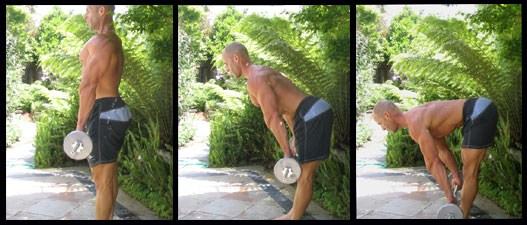
Lift barbell from the floor to thigh height (arms extended down). Start with bent knees and keep a neutral spine. Lower it back down slowly, again bending the knees. Done this way, most of the lifting is felt in the legs, giving hamstring exercise and strengthening at the same time as developing the quad muscles.

Tags: athlete, back pain, tall straight backed chair

Comments 1 Comment »

Looking for a chest workout that you can do at home? Your local gym with all the machines imaginable is perfect of course, but sometimes you probably just don’t have the time or the motivation to get there. Working out at home can save you a lot of time and money.

So here is a quick but super effective alternative – and all you will need is a cheap set of dumbbells. Have the dumbbells laid out right there ready, on pillows to make them easier to pick up and put down. Pillows can also prevent damage to your floor.

Note that because the pushups will take the first flush of your energy, you will need a much lighter weight than you normally use for the dumbbell exercises. Read the rest of this entry »

Tags: energy, risking injuries

Comments No Comments »