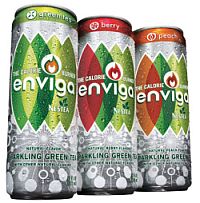
 Every season it seems there is a new loss secret that becomes a great big hype machine. Last year is was Anatrim and Hoodia and right now it is Green Tea. I know that there are a lot of reasons to believe that green tea is very good for you but it is not a wonder drug for losing even if you mix it with caffeine and other chemicals as Enviga has. There is no such thing really as negative calories and there is a better way to look at loss by increasing your metabolism on a natural basis and reducing your calorie content by eating the right foods. ABC News has exposed this product and I am happy that they have.
The makers of Enviga bill the sparkling, caffeinated green tea as an energy drink designed to promote a healthy lifestyle. According to tests conducted by Switzerland’s University of Lausanne and Nestle, who manufacture the beverage along with Coca-Cola, drinking three 12-ounce cans of Enviga per day burns 50 to 100 calories.
Though it’s only available in New York City and Philadelphia now, early this year, the drink will hit store shelves nationwide.
Enviga gets its calorie-burning power from the combination of caffeine and EGCG, an antioxidant naturally found in green tea. Though its makers stand by the drink’s ability to burn calories, Nestle and Coca-Cola claim they’re not marketing Enviga as a loss product.
“This product seems ideal for folks that are exercising regularly, have a balanced diet, and are taking care of themselves. This is one more step. It would be great if the product was inspirational, but it’s not a loss product,” Coca-Cola spokesman Ray Crockett said.
Though Enviga is not marketed specifically as a loss product, some doctors and consumer advocates say that looking at the ads, it’s hard to think of anything else.
But according to doctors, drinking the green tea concoction is unlikely to make anyone shrink in size. For that reason, earlier this month the Center for Science in the Public Interest announced it will sue Coca-Cola and Nestle if they persist with the current ad campaign for Enviga.
“This is all marketing hype based on small measured increases in metabolism from green tea. When tested on patients, green tea does not produce measurable loss, probably because if it boosts your metabolism you eat more to compensate,” said Dr. Darwin Deen of Albert Einstein College of Medicine’s department of family medicine and community health.
Dr. David Katz, ABC News medical contributor and associate professor at Yale University’s School of Public Health, said Enviga’s calorie burning claims are based on insufficient research.
“It’s putting marketing hype ahead of science,” Katz said. “The science here is not ready for primetime. There is a hint in animal research and in very early studies that EGCG can boost metabolism a little bit, but we don’t know if that contributes to control.”
Some members of the medical community worry that the high amount of caffeine in Enviga — 100 milligrams per serving, or 300 if drinkers consume the suggested three cans per day — could increase metabolisms to dangerous levels.
“The caffeine intake [of] 300 milligrams per day is a level that can cause jitteriness…elevated heart rate, and anxiety,” said Leslie Bonci, director of sports nutrition at the University of Pittsburgh Medical Center.
Bonci said that despite its shiny silver packaging, Enviga is no magic bullet.
“Everyone wants the magic bullet for loss, so this will be one of many products people will try in the quest for the quick fix,” she said. “The issues are not just loss, but safe weight loss. Caffeine is not safe for everyone especially in larger quantities.”