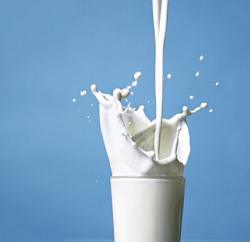
 There is no doubt that the overuse of full fat milk dairy products is one of the main reasons why such a big percentage of the fat calories in the average American diet are swollen with satts. We have been bombarded on all sides with the dictum that milk is our ‘most nearly perfect food.’ Mothers are forever urging their children to drink milk. ‘Drink milk’ it’s so good for your health!’
We accepted that premise fully, until a few years ago”until we began to dig out the truth about the various types of fat and full fat milk. Right then and there, we discovered that whole milk was not the ‘most nearly perfect food’ for humans although it was ideal for calves.
It is an entirely different story with skim or low-fat milk. It is immensely good for all of us, and perhaps entitled to the accolade, the ‘most nearly perfect food.’
Milk Contains Nutrients
Milk contains, to be sure, extra proteins and minerals especially calcium, which is needed by grownups, as well as children. But milk is not at all the health food it’s cracked up to be, because it is very, very rich in satt-loaded fat.
Look around and about you. Watch men, aged 25 to 35, faithfully drink ‘healthful’ full fat milk. Then remember that for each man killed by alcoholic cirrhosis of the liver, more than 2500 will die because their coronary arteries are choked with cholesterol and fat.
Our textbooks tell us that full fat milk contains only 3.9 percent fat, and most people read it to mean only a very small amount. However, milk consists of 87 percent water, and only 13 percent solids. The actual, honest-to-goodness food part of whole milk consists of 26 .7 percent fat, which by any way of reckoning, means that full fat milk is a very fatty food. Full fat milk is just as fatty as an average pork chop. It gives you twice as much fat, ounce for ounce, as you get in the average green olive; more fat than you get in the average frankfurter.
How Much Full Fat Milk is too Much
As we have pointed out, doctors and nutritionists have a rule-of-thumb guide by which they try to limit the amount of all types of fat in a balanced diet to 25 percent of the calories. Unhappily for this rule, at least 53 percent of the calories provided by fresh, whole milk are derived from fat, and supersaturated fat, at that.
To make matters worse, only 40 percent of the milk used in this country is consumed as fresh, full fat milk. The biggest percentage of the remaining 60 percent is eaten in the form of ice cream, coffee cream, cheese, and butter. These last named foods are among the worst, as far as your blood-cholesterol levels are concerned. Coffee cream averages 20 percent fat; ice cream, a minimum ofl2.7 percent; cheese (with the exception of cottage cheese) from 35to40 percent. Butter is 81 percent fat.
We can have absolutely no quarrel with the low-fat, or fat-free types of fluid milk. In fact, we welcome them heartily as fine good foods. Unfortunately, however, these forms of milk are not popular. Percentage wise, they are not much used. Full fat milk gets practically all the ‘play.’f
We are literally and actually stuffed with hard milk-fat by our present day nutrition recommendations which, in light of our newest food knowledge, must be drastically revised.
How Much and What Kind of Milk to Drink
What can you do about the milk-fat problem and still assure yourself of the good proteins, vitamins, and minerals in milk? Drink it in the recommended glassfuls each day, in amounts suggested, but cut down on the fat. You can compromise, according to your age and your blood-cholesterol levels.
1. For safety first, drink skimmed milk.
2. Otherwise Drink 1% milk…don’t worry you will get used to it.
Skim, or fat-reduced milk will taste different when you first sample it, but keep trying and you will soon develop a taste for it; just as many have developed a taste for black coffee. Once you get to liking the new kind of milk, you will much prefer it to the old and you will certainly like living longer.
The dairy industry can greatly help the cause of heart healthy eating by making fresh skim milk more universally available at prices which are fair to the farmer, distributor, and consumer alike. The lack of ‘body’ in fresh skim milk often discourages its use by consumers; but you can make it taste better by adding powdered skim milk, which makes it ‘thicker’ and gives it a richer taste, better even than full fat milk.








The key for a skinny guy to gain weight and muscle fast, is first the workout must answer the ectomorph or skinny guy’s issues and needs.
I LOVE milk!! I recently switched to skim milk and honestly can’t tell a huge difference(or any at all) between it and 2%- yummy and low fat!
The belief that saturated fat will increase your risk of heart attacks and cardiovascular disease is simply untrue. A 2010 study in the American Journal of Clinical Nutrition, which reviewed 21 studies relating to the risk of heart disease, stroke and saturated fats, found that: “… there is no significant evidence for concluding that dietary saturated fat is associated with an increased risk of CHD [coronary heart disease] or CVD [stroke and cardiovascular disease].”
Benefits of full-fat dairy:
Diabetes: Palmitoleic acid, which occurs naturally in full-fat dairy products and meat, protects against insulin resistance and diabetes. One study found people who consumed full-fat dairy had higher levels of trans-palmitoleate in their blood, and this translated to a two-thirds lower risk of developing type 2 diabetes compared to people with lower levels.
Cancer: Conjugated linoleic acid (CLA), a type of fat found naturally in cow’s milk, significantly lowers the risk of cancer. In one study, those who ate at least four servings of high-fat dairy foods each day had a 41 percent lower risk of bowel cancer than those who ate less than one. Each increment of two servings of dairy products equaled a 13 percent reduction in a woman’s colon cancer risk.
Weight: Women who ate at least one serving of full-fat dairy a day gained 30 percent less over a nine-year period than women who ate only low-fat (or no) dairy products.
Heart Disease: People who ate the most full-fat dairy were less likely to die from cardiovascular disease, according to a 16-year study of Australian adults.
Visit http://articles.mercola.com/sites/articles/archive/2011/05/21/why-you-need-to-avoid-low-fat-milk-and-cheese.aspx for more information and links to supporting research studies.
Further to and all those brainwashed fat phobics here is more data on the importance of saturated fats and the wisdom of traditional diets.
For example healthy lungs require saturated fats to function properly avoiding “the very important phospholipid class called lung surfactant is a special phospholipid with 100 percent saturated fatty acids. It is called dipalmitoyl phosphatidylcholine and there are two saturated palmitic acid molecules attached to it. When people consume a lot of partially hydrogenated fats and oils, the trans fatty acids are put into the phospholipids where the body normally wants to have saturated fatty acids and the lungs may not work effectively. Some research has suggested that trans fatty acids are causing asthma in children.
Recent research shows that having enough saturated fat prevents stroke; and to protect our kidneys from disease, and to keep the heart pumping efficiently and draw upon the saturated fats to repair itself when in trouble, research shows we need certain kinds of saturated fatty acids, which are found only in the natural fats such as animal fats and coconut, palm kernel oils and butter.”
Hi! You are correct the body does require saturated fatty acids for many of its functions. But i do believe this article is making a valid point about drink skim or low fat milk rather than full fat. Many people normally get the adequate requirement of saturated fat from their diets, if not more, there is no need to drink full fat, this can lead to excess and we all know moderation is the key to everything. And also in reference to your post below, i would like to acknowledge that back then the lifestyle was different, as society, technology and everything changes, so do our bodies needs and therefore our eating habits.
People have been brainwashed since the 50’s that Full Fat, Butter, anything beneficial is bad for you, so that the low fat product companies can make money out of us. The fact is that the body can not use vitamins and minerals if it does not have any fats, the kind that is from butter especially. Taking out fat from milk, leaves the milk virtually useless as the milk fat is what we need to take the vitamins from the milk. Butter fat is a carrier for important fat-soluble vitamins A, D, E and K. Dietary fats are needed for the conversion of carotene to vitamin A, for mineral absorption and for a host of other processes.
The dangers of polyunsaturates
The public has been fed a great deal of misinformation about the relative virtues of saturated fats versus polyunsaturated oils. Politically correct dietary gurus tell us that the polyunsaturated oils are good for us and that the saturated fats cause cancer and heart disease. The result is that fundamental changes have occurred in the Western diet. At the turn of the century, most of the fatty acids in the diet were either saturated or monounsaturated, primarily from butter, lard, tallows, coconut oil and small amounts of olive oil. Today most of the fats in the diet are polyunsaturated from vegetable oils derived mostly from soy, as well as from corn, safflower and canola.
Modern diets can contain as much as 30% of calories as polyunsaturated oils, but scientific research indicates that this amount is far too high. The best evidence indicates that our intake of polyunsaturates should not be much greater than 4% of the caloric total, in approximate proportions of 1 1/2 % omega-3 linolenic acid and 2 1/2 % omega-6 linoleic acid.30 EFA consumption in this range is found in native populations in temperate and tropical regions whose intake of polyunsaturated oils comes from the small amounts found in legumes, grains, nuts, green vegetables, fish, olive oil and animal fats but not from commercial vegetable oils.
Excess consumption of polyunsaturated oils has been shown to contribute to a large number of disease conditions including increased cancer and heart disease; immune system dysfunction; damage to the liver, reproductive organs and lungs; digestive disorders; depressed learning ability; impaired growth; and gain.
One reason the polyunsaturates cause so many health problems is that they tend to become oxidized or rancid when subjected to heat, oxygen and moisture as in cooking and processing. Rancid oils are characterized by free radicals—that is, single atoms or clusters with an unpaired electron in an outer orbit. These compounds are extremely reactive chemically. They have been characterized as “marauders” in the body for they attack cell membranes and red blood cells and cause damage in DNA/RNA strands, thus triggering mutations in tissue, blood vessels and skin. Free radical damage to the skin causes wrinkles and premature aging; free radical damage to the tissues and organs sets the stage for tumors; free radical damage in the blood vessels initiates the buildup of plaque. Is it any wonder that tests and studies have repeatedly shown a high correlation between cancer and heart disease with the consumption of polyunsaturates. New evidence links exposure to free radicals with premature aging, with autoimmune diseases such as arthritis and with Parkinson’s disease, Lou Gehrig’s disease, Alzheimer’s and cataracts.
q baig, you speak a lot of so called research, but you don’t reference any of it, mostly because it is not science at all but conjecture. Most government bodies (such as the Australia heart foundation) that are responsible for scientific research into heart disease recommend a diet low in saturated fat and as a result heart disease has decrease over the last 50 years, it has not increased. See this link for USA data: http://www.cdc.gov/mmwr/preview/mmwrhtml/mm4830a1.htm
“surveys of food supply suggest that consumption of saturated fat and cholesterol has decreased since 1909”
Why do people always get so bent out of shape when there is an alternative opinion to something they’ve been brainwashed to believe in? Sure we can throw statistics and studies around. But often these are very biased, and only focus on one thing. To mention, thousands of years ago people weren’t sitting at a desk typing on the computer. The lazier we get, the fatter we get regardless. My grandfather walks every single evening rain or shine. He also drinks skim milk, but still eats the same high fat meats and other dairy. My grandmother gives a balanced diet, but his cholesterol stayed the same. When I lived there for a short time, my grandmother offered a vegetarian meal once a week (since I am am one). After a few months she told me “Thank-you.” I was bewildered, “why?” she told me every since she started having a vegetarian day a week, my grandfathers cholesterol lowered and it stats improved.
There are so many arguments, but when it comes down to it, it’s the individual person and their very own lifestyle. Admittedly I do stand that cow’s milk, is for just that. Baby cows.
Even with this belief, I do love my cheese! I won’t drink it, I drink soy, but I definitely like cheese. Everything in moderation, and lots of veggies and fruit. Now there is something that has been proven.
@Daniel: Thank you. I am so sick of these over lazy a** do gooders getting on sites like this and giving unprofessional opinions the way they do. I am in perfect health. 49 years old. Drink whole milk every day of my life. No cholesterol problems, no heart problems, not fat, but I do get out and exercise. I walk. Also, I don[‘t have that brittle bone disease either, which I suspect many women have these days from being afraid to drink whole milk. Go figure. You have to take a calcium pill to keep your bones from breaking while you sip on 2% milk and I am fine without the drugs while drinking whole milk. I’m just saying.
Articles like this is why Americans are completly ignorant about health. Saturated fat is good for you, don’t believe this nonsense. And did he say that most people drink full fat milk? Everyone I know is on a diet and they all drink 2% milk or lower and of course none of them ever loses any . Full fat unpastuerized milk is the way to go if you want to be healthy…science proves that.
Well my mom forces me to drink whole mik because she claims it has more calcium than skim, and she won’t listen when I tell her that they place nutrients into skim. I just make sure I exercise properly to help counter the fat and cholesterol. In all honesty, the fat doesn’t bother me as I eat about half a jar of peanut butter a day. It’s just the amount of cholesterol.
I recomend jumping onto youtube and search for Gary taubes.
Very enlightening and personaly i think he is on to something 🙂
What did cave men eat for the 150,000 years before agriculture and in areas where herding milk producing animals didn’t occur consume? A lot of animals and plants. Their diets where high in saturated animal fat. Although beef from corn fed cattle are higher in fat and have a poor Omega3 to 6 ratio, our ancestors ate much of the fatty parts of animals, organ meats, bone marrow etc. Fat is not the problem, sugar and the foods broken down to sugar are. We have an increasing amount of obesity and disease. What has been increasing in consumption…carbohydrate. Your precious “healthy” whole wheat and brown rice are broken down to sugar and too much sugar in the blood that cannot be put into muscle immediately is converted to fat and stored. Low fat high carb diets that have been promoted for the past 20 years have failed us. Vegetable oils have only been around for about 50 years and are not natural, fat from animals (including seafood), coconut, and avacado are!
Q. Baig–I was about to refer to the same study!
You can read the full study here: http://www.ajcn.org/cgi/reprint/84/6/1481?maxtoshow=&hits=10&RESULTFORMAT=&author1=Rosell&andorexactfulltext=and&searchid=1&FIRSTINDEX=0&sortspec=relevance&resourcetype=HWCIT
The study not only showed that whole milk and cheese consumption leads to less gain in perimenopausal and menopausal women, but consumption of low-fat dairy led to MORE gain!!
It might be that women who tend to overeat traded their full-fat products for low-fat ones, but they still tend to be overeaters, and so they still get fat.
Also, milk fat contains CLA, which has been shown to help burn fat. However, even when the researchers controlled for CLA consumption, the high-milk-fat group was still less prone to gain.
I guess it’s a mystery! I eat whole fat dairy because it makes my skin remarkably smooth and clear. I attribute it to the naturally occuring retinol. Taking retinol pills does not have the same effect for me; neither does eating lots of beta-carotene (from veggies), even though the body is supposed to eventually convert the beta carotene into retinol.
Remember that there’s a lot that we still don’t understand about food. Sure, scientists have identified what we refer to as “nutrients,” but there are still thousands of nonnutrients that we don’t completely understand (but we learn more about them every day–e.g. alpha lipoic acid, polyphenols, etc.).
Full fat milk makes you thinner – Swedish study
Published: 8 Jan 07 10:54 CET
Dictionary tool Double click on a word to get a translation
Full fat dairy products are more likely to keep you slim than comparable low fat foods. That’s the apparently topsy-turvy conclusion of a new Swedish study, which shows that the fat encourages calcium uptake.
‘Meat glue’ approval draws criticism (10 Feb 10)
Swedes develop Huntington’s medicine (5 Feb 10)
Starbucks picks Arla for European drinks deal (21 Jan 10)
Researchers at Stockholm’s Karolinska Institute now reckon that daily consumption of full fat dairy products will lead to a reduction of obesity, reported Svenska Dagbladet.
The startling result was based on interviews with almost 20,000 women whose dietary habits have been tracked since 1987.
When the study began, the women had an average body mass index (BMI) of 23.7. Ten years later, the women who had regularly consumed full fat milk or cheese had a lower BMI than the rest of the group.
A glass of full fat milk every day will, according to the researchers, result in 15 percent less gain. But full fat cheese was an even more effective slimming product: one portion a day resulted in 30 percent less gain.
“The surprising conclusion was that increased consumption of cheese meant that over women lost ,” said Alicja Wolk, professor at Karolinska Institute, to Svenska Dagbladet.
The Local (news@thelocal.se/08 656 6518)
Great info. I had never heard this before and it is an interesting idea. Does this perhaps mean that full fat milk is more filling and that is why it does not lead to gain?
The 4% of fat that is in whole milk contains 100% fat. A pork chop with its lean part removed does not contain 100% fat. Yeah I can play with statistics too. Cholesterol build up within the body comes from over consumption of saturated fat. Eating a correctly balanced diet should and must have a level of both saturated and unsaturated fats if we dont eat saturated fat we die – fact! I eat a healty diet – and it includes a portion of whole milk. But, here we will agree. My intake is about 125g per day(about 5g satfat). I read that the average active man should take about 25g of satfat per day. 1/8th of a 250g block of butter contains about 25g of satfat.
Up to the early part of the 20th century we consumed a large amount of full fat in unpasteurised milk plus loads of animal fats with heart attacks and cholesterol not being a problem. OK people were slim so exercised away the fat but it shows there is far more to this issue than milk fats, saturated fats and cholesterol. I am certain in years to come this incomplete knowledge passed of as expert is therefore “pseudo science” and will be regarded as rubbish.
Likely culprits are manipulation of fats in food processing via hydrogenation, pasteurisation, trans fats etc.
Skim milk tastes so watery !
I’m satisfied 1% milk, I’m not afraid to have a little fat in my diet.
Really? Whole Milk? This is your target problem for soceity? I had a woman not too long ago who when I tried to order a WHOLE milk drink rather than a 2% tell me that it was bad for me. This was from a woman sucking down a 32oz diet coke. I’ll take a natural product over some man-made zero cal crap any day. If you enjoy whole milk just make sure you get off the couch once a day and take a walk, you’ll be fine. I can think of far worse things a person could eat/drink over milk. People should worry about the big rocks (twinkies, mc donalds, etc.) before worrying about the pebbles. What’s next butter? Every subsitute for that has been found to be MORE dangerous than the natural product it replaced. We humans, we’re so brilliant, we’re stupid.
Not all fats are useful for all people! Caution ..
And not all cow’s milk is useful for all people, a lot of people are not comfortable with full-fat cow’s milk, but they are comfortable with the milk of sheep, or camel, buffalo, and so on ..
Every man has his blade “blood type” is determined from any of the milk useful for you ..
We have the best milk is one of the camel, sheep and then cattle and best raw sheep’s milk and not full of fat-free!! ..
I hope that you emerge from the darkness “free and full-fat”