Fiber is one of those things that we are told to eat more of yet there should be some confusion. Not all fiber is alike.
Most Americans know that foods high in fiber are full of nutrients because they are less processed. There are two kinds of dietary fiber and you need both.
Two Types of Fiber
 Insoluble fiber (the type that does not dissolve in water and is found in wheat bran, oats, whole grains and vegetables) helps promote regularity, prevent hemorrhoids and diverticulosis. It may also help prevent colon cancer.
Soluble fiber (the type that dissolves in water, found in oat bran, oats, beans, apples and carrots) helps lower blood cholesterol levels and control blood sugar levels in people with diabetes.
According to the American Dietetic Association’s(ADA) Dietary Guidance for Health Children aged 2 to 11, the perfect fiber intake has not been defined.
Several organizations have suggested that children over 2 consume a daily intake equal or greater than their age plus 5 grams per day. So if you have an eight year old, he or she might consume 13 grams of dietary fiber per day. Ultimately, they should build up to consuming 25 to 35 grams per day after the age of 20 years.
But that may seem a long way off for your child.
How can you Incorporate Fiber into your Daily Diet?
First, start consuming high fiber foods in small amounts. Let your body adjust by increasing the fiber you eat in small increments. If you increase your fiber intake dramatically, gas, diarrhea, and bloating may result.
Here are some great sources of fiber from a great page on Fiber at Mercola.com
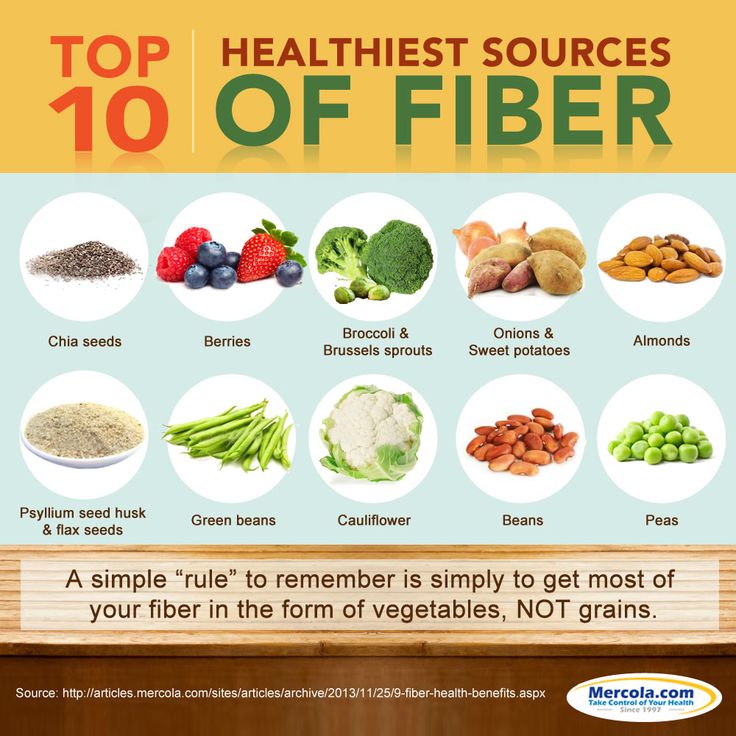
t is actually because your body can’t digest fiber that it plays such an important part in digestion. Soluble fiber, like that found in cucumbers, blueberries, beans, and nuts, dissolves into a gel-like texture, helping to slow down your digestion. This helps you to feel full longer and is one reason why fiber may help with weight control.
Insoluble fiber, found in foods like dark green leafy vegetables, green beans, celery, and carrots, does not dissolve at all and helps add bulk to your stool. This helps food to move through your digestive tract more quickly for healthy elimination. Many whole foods, especially fruits and vegetables, naturally contain both soluble and insoluble fiber.
However, increasing your fiber intake gradually should minimize these effects. Substitute peas, nuts, beans, fruits and vegetables for some of the processed foods you eat.
Think about replacing high fat or highly processed foods with high fiber foods.
Second, drink plenty of fluids to help the fiber do its work. Make sure that you are drinking lots as you will have a lot of trouble running that fiber through your system without enough water to make it work
Third, choose foods, not fiber supplements, to gradually increase your intake of fiber. Fiber containing foods offer other nutrients like vitamins, minerals and protein while supplements may not. Here are some healthful combinations that can be incorporated into your daily menu:
Visit the Family Health site site to see a table with the amount of fiber in common foods.