Acupuncture originated in China more than 2,000 years ago, making it one of the oldest and most commonly used medical procedures in the world.
It is important to inform all of your health care providers about any treatment that you are using or considering, including acupuncture.
Ask about the treatment procedures that will be used and their likelihood of success for your condition or disease.
Be an informed consumer and find out what scientific studies have been done on the effectiveness of acupuncture for your health condition.
If you decide to use acupuncture, choose the practitioner with care. Also check with your insurer to see if the services will be covered.
What Is Acupuncture?
Acupuncture is one of the oldest, most commonly used medical procedures in the world.
Originating in China more than 2,000 years ago, acupuncture began to become better known in the United States in 1971, when New York Times reporter James Reston wrote about how doctors in China used needles to ease his pain after surgery.
The term acupuncture describes a family of procedures involving stimulation of anatomical points on the body by a variety of techniques.
American practices of acupuncture incorporate medical traditions from China, Japan, Korea, and other countries.
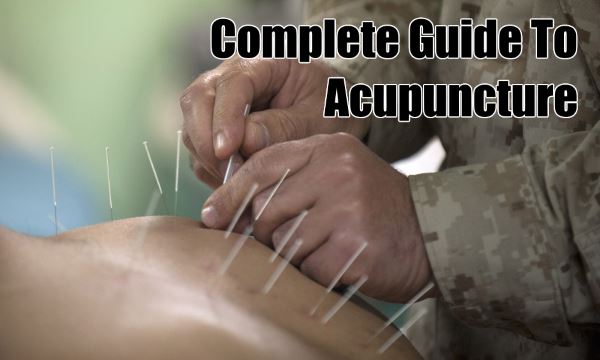
The acupuncture technique that has been most studied scientifically involves penetrating the skin with thin, solid, metallic needles that are manipulated by the hands or by electrical stimulation.
How Widely Is Acupuncture Used In The United States
In the past two decades, acupuncture has grown in popularity in the United States.
The report from a Consensus Development Conference on Acupuncture held at the National Institutes of Health (NIH) in 1997 stated that”
Acupuncture is being “widely” practiced–by thousands of physicians, dentists, acupuncturists, and other practitioners–for relief or prevention of pain and for various other health conditions.
According to the 2002 National Health Interview Survey–the largest and most comprehensive survey of complementary and alternative medicine (CAM) use by American adults to date.
An estimated 8.2 million U.S. adults had ever used acupuncture, and an estimated 2.1 million U.S. adults had used acupuncture in the previous year.
What Does Acupuncture Feel Like?
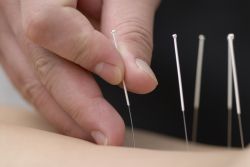 Acupuncture needles are metallic, solid, and hair-thin. People experience acupuncture differently, but most feel no or minimal pain as the needles are inserted.
Some people are energized by treatment, while others feel relaxed. Improper needle placement, movement of the patient, or a defect in the needle can cause soreness and pain during treatment.
This is why it is important to seek treatment from a qualified acupuncture practitioner.
Is Acupuncture Safe?
The U.S. Food and Drug Administration (FDA) approved acupuncture needles for use by licensed practitioners in 1996.
The FDA requires that sterile, nontoxic needles be used and that they be labeled for single use by qualified practitioners only.
Relatively few complications from the use of acupuncture have been reported to the FDA in light of the millions of people treated each year and the number of acupuncture needles used.
Still, complications have resulted from inadequate sterilization of needles and from improper delivery of treatments.
Practitioners should use a new set of disposable needles taken from a sealed package for each patient and should swab treatment sites with alcohol or another disinfectant before inserting needles.
When not delivered properly, acupuncture can cause serious adverse effects, including infections and punctured organs.
Does Acupuncture Work?
According to the NIH Consensus Statement on Acupuncture, there have been many studies on acupuncture’s potential usefulness, but results have been mixed.
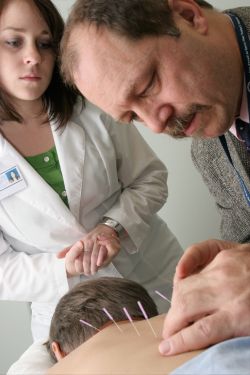 Reasons for mixed results are that there are complexities with study design and size, as well as difficulties with choosing and using placebos or sham acupuncture.
However, promising results have emerged, showing efficacy of acupuncture, for example, in adult postoperative and chemotherapy nausea and vomiting and in postoperative dental pain.
There are other situations–such as
- Addiction,
- Stroke rehabilitation,
- Headache,
- Menstrual cramps,
- Tennis elbow,
- Fibromyalgia,
- Myofascial pain,
- Osteoarthritis,
- Low-back pain,
- Carpal tunnel syndrome, and
- Asthma
In which acupuncture may be useful as an adjunct treatment or an acceptable alternative or be included in a comprehensive management program.
An NCCAM-funded study recently showed that acupuncture provides pain relief, improves function for people with osteoarthritis of the knee, and serves as an effective complement to standard care.
Further research is likely to uncover additional areas where acupuncture interventions will be useful.
How Might Acupuncture Work?
Acupuncture is one of the key components of the system of traditional Chinese medicine (TCM). In the TCM system of medicine, the body is seen as a delicate balance of two opposing and inseparable forces: yin and yang.
Yin represents the cold, slow, or passive principle, while yang represents the hot, excited, or active principle.
Among the major assumptions in TCM are that health is achieved by maintaining the body in a “balanced state” and that disease is due to an internal imbalance of yin and yang.
This imbalance leads to blockage in the flow of qi (vital energy) along pathways known as meridians.
It is believed that there are 12 main meridians and 8 secondary meridians and that there are more than 2,000 acupuncture points on the human body that connect with them.
Preclinical studies have documented acupuncture’s effects, but they have not been able to fully explain how acupuncture works within the framework of the Western system of medicine that is commonly practiced in the United States.
It is proposed that acupuncture produces its effects through regulating the nervous system, thus aiding the activity of pain-killing biochemicals such as endorphins and immune system cells at specific sites in the body.
In addition, studies have shown that acupuncture may alter brain chemistry by changing the release of neurotransmitters and neurohormones and, thus, affecting the parts of the central nervous system related to sensation and involuntary body functions,such as
- Immune reactions and processes that regulate a person’s blood pressure,
- Blood flow, and
- Body temperature.
How Do I Find A Licensed Acupuncture Practitioner?
Health care practitioners can be a resource for referral to acupuncturists.
More medical doctors, including neurologists, anesthesiologists, and specialists in physical medicine, are becoming trained in acupuncture, TCM, and other CAM therapies.
In addition, national acupuncture organizations (which can be found through libraries or Web search engines) may provide referrals to acupuncturists.
Check A Practitioner’s Credentials.
An acupuncture practitioner who is licensed and credentialed may provide better care than one who is not.
About 40 states have established training standards for acupuncture certification, but states have varied requirements for obtaining a license to practice acupuncture.
Although proper credentials do not ensure competency, they do indicate that the practitioner has met certain standards to treat patients through the use of acupuncture.
Do not rely on a diagnosis of disease by an acupuncture practitioner who does not have substantial conventional medical training.
If you have received a diagnosis from a doctor, you may wish to ask your doctor whether acupuncture might help.
How Much Will Acupuncture Cost?
A practitioner should inform you about the estimated number of treatments needed and how much each will cost. If this information is not provided, ask for it.
Treatment may take place over a few days or for several weeks or more. Physician acupuncturists may charge more than nonphysician practitioners.
Will It Be Covered By My Insurance?
Acupuncture is one of the CAM therapies that are more commonly covered by insurance.
However, you should check with your insurer before you start treatment to see whether acupuncture will be covered for your condition and, if so, to what extent.
Some insurance plans require preauthorization for acupuncture. (For more information, see NCCAM’s fact sheet “Consumer Financial Issues in Complementary and Alternative Medicine”)
What Should I Expect During My First Visit?
During your first office visit, the practitioner may ask you at length about your health condition, lifestyle, and behavior.
The practitioner will want to obtain a complete picture of your treatment needs and behaviors that may contribute to your condition.
Inform the acupuncturist about all treatments or medications you are taking and all medical conditions you have.
Common Acupuncture Definitions
Complementary and alternative medicine (CAM): A group of diverse medical and health care systems, practices, and products that are not presently considered an integral part of conventional medicine.
Complementary medicine is used together with conventional medicine, and alternative medicine is used in place of conventional medicine. Some health care providers practice both CAM and conventional medicine.
Conventional medicine: A whole medical system practiced by holders of M.D. (medical doctor) or D.O. (doctor of osteopathy) degrees and by their allied health professionals, such as physical therapists, psychologists, and registered nurses.
Other terms for conventional medicine include allopathy; Western, mainstream, and orthodox medicine; and biomedicine.
Fibromyalgia: A complex chronic condition having multiple symptoms, including muscle pain, fatigue, and tenderness in precise, localized areas, particularly in the neck, spine, shoulders, and hips.
People with this syndrome may also experience sleep disturbances, morning stiffness, irritable bowel syndrome, anxiety, and other symptoms.
Meridian: A traditional Chinese medicine term for each of the 20 pathways throughout the body for the flow of qi, or vital energy, accessed through acupuncture points.
Placebo: An inactive pill or control procedure given to a participant in a research study as part of a test of the effects of another substance or treatment.
Scientists use placebos to get a true picture of how the substance or treatment under investigation affects participants.
In recent years, the definition of placebo has been expanded to include such things as aspects of interactions between patients and their health care providers that may affect their expectations and the study’s outcomes.
Preclinical study: A study done to obtain information about a treatment’s safety and side effects when given at different doses to animals or to cells grown in the laboratory.
Qi: A Chinese term for vital energy or life force.
In traditional Chinese medicine, qi (pronounced “chee”) is believed to regulate a person’s spiritual, emotional, mental, and physical balance, and to be influenced by the opposing forces of yin and yang.
Traditional Chinese medicine (TCM): A whole medical system that was documented in China by the 3rd century B.C.
TCM is based on a concept of vital energy, or qi, that is believed to flow throughout the body. It is proposed to regulate a person’s spiritual, emotional, mental, and physical balance and to be influenced by the opposing forces of yin (negative energy) and yang (positive energy).
Disease is proposed to result from the flow of qi being disrupted and yin and yang becoming unbalanced.
Among the components of TCM are herbal and nutritional therapy, restorative physical exercises, meditation, acupuncture, and remedial massage.