Over the last few years tattoos have become more and move common. I should know as I have no tattoos but my wife has several and is right now planning to get another with an integration of our two kids names in this one.
This new tattoo started me thinking about how people usually go through the process of getting a tattoo and all of the sterilization methods and the importance of safety in a tattoo parlor.
What To Think About For Tattoo Safety?
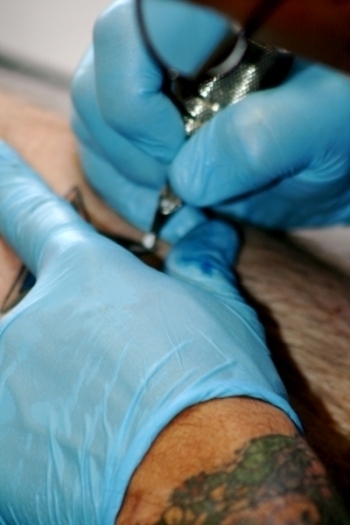 First of all there is a real sense of menace that permeates most tattoo parlors. The staff are covered in tattoos and the customers tend to be the same. Tattoos are still a bit of an anti establishment type of attitude so the first time customer can sometimes feel a little intimidated to ask safety questions, please don’t.
The industry is regulated by state and local officials, but not the FDA, and there is no such thing as an agency-approved tattoo pigment or ink. The FDA is considering more involvement, said Dr. Linda Katz, director of agency’s Office of Cosmetics and Colors.
“If you look at the fact that a quarter of adults have a tattoo, it’s amazing how safe the industry is,” said Dr. R. Rox Anderson, a Harvard Medical School dermatologist and tattoo removal expert.
None of the people in a recent survey had ever had a tattoo removed, though 17 percent had considered it. The telephone survey on tattoos included 253 women and 247 men and was conducted in 2004. It has a margin of error of 4.5 percentage points.
Once you have an idea of a tattoo you would like go around to a few places and check out how they look.
- Are they clean?
- How is the staff?
- How good is the quality of their work?
Make it pretty clear that you are not too sure what you are looking for yet and that you are just getting ideas and you should be better off going and checking things out. Once you have settled on a place you should be sure to ask a few questions:
- As tattoo artists do you thoroughly wash your hands with antibacterial solution immediately before and after each tattoo application?
- Do you wear latex gloves during the tattooing procedure?
- Do you use single service materials and equipment (i.e., each needle and tube set is individually packaged, dated and sealed, and autoclave sterilized), and set up and open them in front of the client?
Do you use sterile disposable needles? - Do you sanitize your work space with an EPA (Environmental Protection Agency)-approved viricidal disinfectant, preferably one that kills tuberculosis, before and after each client?
- Do you thoroughly rinse tube/needle set from tattoo machine using an ultrasonic tank before discarding?
- Do you properly dispose of contaminated materials?
- Do you have an FDA-regulated autoclave on site?
OK this is new to me, what is an autoclave? An autoclave is a surgical sterilizer that uses superheated steam to kill bacteria, fungus, and viruses that might contaminate tattoo needles.
It is important to note that using an autoclave is just about the only way to kill hepatitis strains B, C, and D in tattoo needles.
Merely spraying disinfectant on needles or soaking the needles in alcohol will not kill all of the bacteria and viruses which are likely to contaminate tattooing equipment. Therefore, try to be sure that your tattooist uses an autoclave.
After you have your tattoo you should do a few things to take care that you do not get an infection afterwards as it is healing.
Remember that in order to put the pigment into your skin the needles have to drive small holes and this will cause scabbing and is a place that bacteria can get into and get infected.
1. Keep the bandage on the tattoo for at least two hours after the work is complete (possibly longer, depending on the tattoo artist’s instructions).
2. Remove the bandage very carefully and leave it off. This allows your skin to breathe and begin the healing process.
3. Avoid getting a lot of water on your new tattoo – showers are OK, but no swimming or baths for a few weeks.
4. Expose your healing skin to air as much as possible without soaking in the sun.
5. Use mild soap to lightly rinse the tattoo. Lightly pat it dry with a washcloth, taking care not to rub it.
6. Dab an over-the-counter antibiotic cream on the cleaned area.
7. Continue to lightly apply antibiotic cream to your tattooed skin for about a week, then switch to plain skin lotion to keep it moist throughout the day.
I know that I do not have any trouble with tattoos although I don’t expect to be getting any myself. The most important thing to me is to make sure that tattoo safety is very important to anyone thinking of getting one.






I have read good quality things in this article. Worth book-marking for returning to. I wonder what amount efforts you put to make this kind of impressive beneficial internet site.
there are variants of Hepatitis which are very difficult to cure, take for example Hep-B and Hep-C”:`
Wow, great article for a guy who does not have any tattoos. I agree with pretty much everything you said except for the last part about caring for your tattoo during the healing phase. Putting over the counter cream such as Newsporin or Bacitracin can actually pull the ink out of your tattoo, which will result in a blotchy-looking tattoo. Not exactly what you want to happen to something that will be on you forever. I think there is a product specifically for the healing process, Tattoo Goo? But most of the artists I have spoken to recommend to just wash the tattoo with soap to clean it, then just keep putting non-scented lotion on the tatoo until it heals completely. The lotion will also help the tattoo from drying out, which will then lead to itching. If your healing tattoo does start to itch then apply lotion, avoid scratching it at all costs because you can scratch some of the ink out of your skin if you scratch too hard. If itching does become a problem then try slapping the tattoo, that will often ease the urge to scratch.
Wow great tips Tattoo Guy. Thanks for adding that. My wife always comes home from getting a new tattoo with a little pack of some kind of moisturiser that they give her and she has never been to the same place twice for a tat so I guess you have the inside scoop on what you guys give out. Thanks
Hey,
Very informative post. Here are some more tips:
– Don’t rush, take the time and come prepared.
– Make sure that the size will fit the spot chosen and that the colors will complement your skin complexion.
– Avoid alcohol, it thins the blood and will cause you to bleed more throughout the process.
Cheers,
Dave