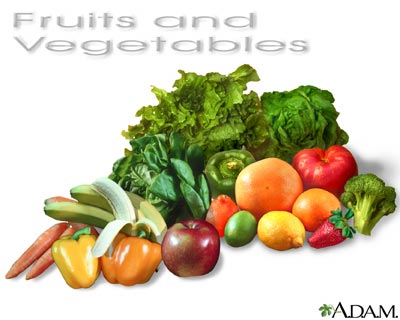
Losing weight for good is a big topic. There will also not be much said about some fairly obvious health issues. If you smoke or have a problem with alcohol or drugs, you probably realize that this isn’t good for you. The same with overeating.
Some of the methods here can help you with these issues, but I am not going to go into any detail about subjects that are so extensively covered all over the mainstream media and internet. The same with the advice to exercise.
I do refer to exercise in the breathing section, but I don’t spell out ‘get x number of hours of exercise per week.’ Exercise is important, but it should be tailored to you as an individual.
I don’t want to imply that what I haven’t written about in detail is not important. It just isn’t the focus of this report.
What I am doing here is presenting a solid foundation upon which you can build. If you do have specific health challenges, need to lose a lot of , get into better shape, everything here will definitely be a good base upon which to add anything else you may need.
One final note about the focus of this report. I try, as much as possible, to give positive rather than negative advice.
What I mean by that is, except where it is absolutely necessary (as with the section on junk foods!), I try to keep the focus on the positive what is good for you rather than on what to avoid.
I am a believer in moderation, so I don’t say you cannot have any, for example, sugar, meat, caffeine or alcohol.
Obviously, if you have a specific reason to completely avoid one or more of these, then you should, for example, some people have a low tolerance for dairy products, while alcoholics cannot risk consuming even a small amount of wine or beer.
Losing Weight for Good – What Does it Take?

In general, I try not to take an extreme, spartan type view to health and nutrition. There are several reasons for this.
For one thing, people are not all the same, so to make a blanket statement is seldom appropriate.
Another thing I’ve found in the research I’ve done over the years is that I simply cannot find evidence that people who follow a very strict diet of any kind are healthier or live longer than average.
It has often been claimed that vegetarians live longer though even this is disputed- but I don’t consider a vegetarian diet to be very strict unless it’s also vegan (no animal products at all).
When I say strict diet, I mean something like vegan, raw foods, macrobiotic or some other diet that compels its followers to avoid certain foods completely.
I also have to say, that when I’ve looked up many individuals who were advocates of very strict diets, they have often lived average or less than average lifespans. I suspect that having a very ‘uptight’ approach to food, exercise or spiritual practice ends up having a counterproductive effect.
I suspect that having a very ‘uptight’ approach to food, exercise or spiritual practice ends up having a counterproductive effect.
The body, mind and spirit respond well to lightness, relaxation and a sense of flow. If you have a very rigid approach to anything, you are creating tension, which is not healthy.
I may seem to contradict the above in some places, as when I talk about breaking the junk food habit. But you have to consider this in context. I mentioned in passing that a little alcohol is okay unless you are an alcoholic. Well, the problem with modern society is that many, many people are addicted to junk foods.
And a lot of food just considered ‘normal’ is really junk food. So, while some may not agree, I don’t really think it’s extreme of very strict to tell people to avoid junk foods, or at least cut back drastically on them. As I see it, the junk food phenomenon is itself extreme. And the fact is, you can have a very varied diet without junk food.
Healthy Shopping to Lose Weight For Good
WHEN YOU’RE THIRSTY, DRINK WATER!
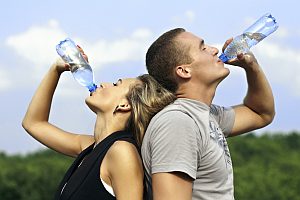 Don’t be fooled by the ‘designer water’ products that often contain added sweeteners. There are some water products that have traces of fruit without any sugar. These are fine.
There are also some more exotic water products that allegedly alter the structure of water in a beneficial way. I am open to this but haven’t done enough research on it to make up my mind.
As for the many ‘alternative’ sweet products, such as breakfast cereals and cookies, they too are a little better than their mainstream alternatives (which, in addition to sugar, have lots of chemicals and artificial ingredients).
But here, too, you are getting lots of sugar, even if it’s in the form of organic maple syrup or organic cane juice. With cereals, in particular, look for ones that are not as highly sweetened. Here’s a clue: if it tastes like candy, it’s probably sweeter than it should be!
Watch The Salt In Your Diet
Here’s another one that’s hard to avoid. ‘Healthy’ chips, frozen foods, crackers, canned goods and so forth are usually quite high in sodium. They are made that way for the obvious reason that saltly is addictive and you are more likely to keep buying something that’s habit forming.
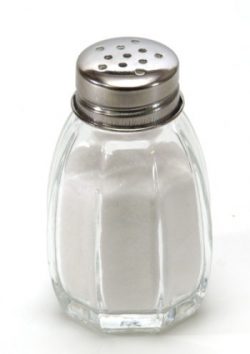 The only way you can cut down on this is to look at labels carefully. You will find that your options are not too great here. With almost any restaurant food even so-called gourmet restaurants you are getting very salty food.
The only real solution is to make things from scratch. Then you can also buy salts that really are healthier: look at the various kinds of sea salt sold at health food stores.
If you are used to a high sodium diet, it will take time to get used to eating less salt. Your food may seem a bit bland. Salt is not something terrible, especially the healthier sea salts.
But it’s simply used excessively in modern society – and this includes ‘health’ and ‘gourmet’ cooking.
With both salt and sugar, don’t fall into the trap of thinking you don’t have to limit your intake unless you have a serious condition such as diabetes or high blood pressure. The fact is, eating either of these to excess (which most people do!) will help to create such conditions if you don’t already have them.
Eat ‘Superfoods’ & Other Good Things To Losing Weight for Good
 So you’ve given up junk food, or at least resolved to cut back on it, and are ready to make regular excursions to your local health food store or the natural foods section of your supermarket. What now?
Vegetarian, Vegan, Macrobiotic, Ayurveda, Raw Foods, Etc.
The above are among the many ‘healthy’ diets that are advocated by different authors, nutritionists, holistic doctors and so forth.
This is where many people get confused, as the advice can be downright contradictory from one ‘expert’ to another. Sadly, this confusion can lead some people to give up the whole losing weight thing.
They can then rationalize in a manner like this ‘since the experts can’t even agree on what’s healthy, and I don’t know who to listen to, I may as well just stick to my old diet.’ Well, I’m here to tell you that this excuse is not valid!
This is a vast topic, but I will do my best to summarize some crucial points. First of all, unless you are strongly motivated to a specific ‘alternative’ diet, I would suggest that you don’t even try to stick to one of the systems listed above.
If you are a vegetarian for ethical or spiritual reasons, that’s fine. If not, that’s also fine. What I’m saying is, don’t try to get into natural foods by picking a very strict diet that will be difficult to adhere to.
My own bias is that no one of these diets is perfect for everyone anyway for losing weight. The research that I’ve studied suggests that the healthiest diets are varied.
That is, varied among healthy, natural foods. There is no need for most people to avoid all meat, dairy, cooked foods, or whatever.
If you have a particular reason to avoid certain foods, such as an allergy, intolerance to milk or wheat, that’s something else.
Another popular idea in today’s nutritional marketplace is the whole acid/alkaline theory. This states that the problem with modern diets is that they are too acidic. Some claim that diseases cannot live in alkaline bodies.
There is also a theory that people with certain blood types should eat a certain diet. Ayurvedic medicine (from India) divides people into several types and gives dietary suggestions for each type.
There are also countless other specialized diets that many people swear by (and others insist are hoaxes). You can try them for yourself, but it is not necessary to follow any of them to eat a much healthier diet.
The losing weight for good diet I will suggest is not a diet at all, but a balanced approach to natural foods and one based on your own experience.
That is, you can try various foods and see how they make you feel. This is actually the most scientific way to go, as you are the one who is eating the food and living in your own body.
Another topic that there is some debate about is fats in losing weight. This is an example of something that can easily confuse people as there are many opinions on the subject.
I am most impressed with the fact that people have been eating fats, including animal fats, for thousands of years. Modern ideas and notions about a ‘low fat’ diet are rather artificial by comparison. Not long ago, many people were consuming products like margarine, thinking they were healthy. Now, research is showing the opposite.
Is Low Fat Good for Losing Weight?
 People often look for low-fat foods to compensate for unhealthy habits like eating too many sweets, eating too much overall or living a sedentary lifestyle.
The subject of ‘good fats’ vs. ‘bad fats‘ is both complex and confusing.
I would suggest that you stick with the ‘natural is better’ axiom and avoid products with words like ‘diet’ ‘low fat’ or ‘nonfat.’
However, there is a something that has to be added to this. When you do consume high fat products, first of all, it is especially important to make sure they are high quality, preferably organic. This applies in particular to meats, eggs, and dairy products.
When you are consuming animal products (if you choose to do so), you are adding another layer of consumption to your diet. That is, you are essentially getting both the animal and whatever IT consumed in its lifetime.
Furthermore, non-organic animal products today are injected with all kinds of questionable things like hormones and antibiotics. True, organic meat and dairy are quite expensive.
But the fact is, even if you are a meat-eater, you don’t need a lot of meat and dairy in your diet. Eating only the highest quality of these products, maybe several times per week rather than daily will keep them more affordable.
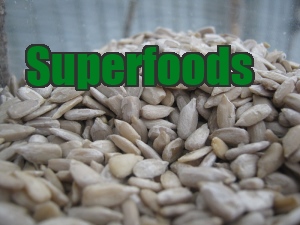
Superfoods
If you keep up with health trends, you may be familiar with the term ‘superfoods.’ This is not a precise word, but a way to describe a food that is extremely high in nutrition.
Often, almost mystical qualities are attributed to certain foods, such as various juices, herbs or ‘newly discovered secret’ from this or that exotic part of the world. In many cases, these are very healthy products for losing weight, though sometimes the people selling them add so much hype it can be hard to know what to believe.
In general, if someone tells you that a nutritional product or food can cure all diseases, make you live forever or something similar, you may want to be a little skeptical. Still, I would also keep an open mind. People have actually achieved seemingly miraculous results with nutrition.
One problem with superfoods is that there are many definitions of what qualifies.
The list is probably not going to be the same for everybody. So you should try some of them out for yourself. What follows are some categories of foods I would place on this list.
Types of Superfoods
Green foods this is a whole category of foods you will find in health food stores and online. These include Spirulina, Blue-Green Algae, Chlorella and Wheat Grass.
There are now many supplements that combine many of these. Again, there is often hype around these, especially with multi-level marketing companies who sell some of them. But they are very high in nutrition.
In general, food from the sea is good for you, provided the water source is clean (unfortunately, not something you can take for granted today).
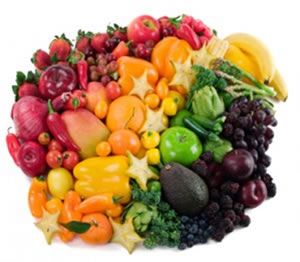
Nuts/Seeds: the best ones are sunflower seeds, almonds, pumpkin seeds, walnuts.
You can get (or make) nut butter made from many of these, which are more nutritious than peanut butter (also more expensive though).
Fruits: blueberries, pomegranate, kiwi, acai, goji, mangosteen, noni.
All very high in antioxidants, vitamins, minerals and enzymes. Some juices combine these.
Healthy Oils: Cod Liver, Flaxseed, Pumpkin Seed, Krill; these are very good sources of ‘good’ fats!
Grains/Flours (preferably organic): Quinoa, Amaranth, Barley, Buckwheat; these are all preferable to processed flours, especially white.
Some other foods/supplements that are very good: Brewer’s Yeast, Wheat Germ, Lecithin, Blackstrap Molasses, Apple Cider Vinegar (organic), Raw Honey, Bee Pollen, Green Tea, Ginger, Ginseng,
You may have to adjust the above list to your own needs. For example, if you are allergic to bee products, you obviously don’t want to take bee pollen.
Some products agree with some people more than others or are good at certain times. For example, whole books have been written on the benefits of apple cider vinegar, while others believe it is too acidic.
I find it to be very helpful as a remedy or preventative, especially near cold/flu season.
Breathe for Losing Weight for good
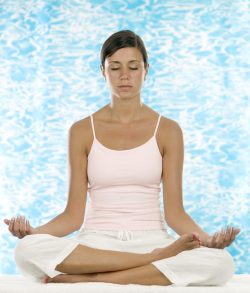
Breathing is rather basic. All of us do it, or we would not be here to discuss the matter. Yet, many of us do not breathe deeply enough or in a way that maximizes our health.
There are many exercises you can do, such as yoga, that teach breathing techniques. In general, it’s important to take deep breaths that are from the abdomen, rather than just the chest.
 A major problem with breathing is that, even if we know how to breathe, we sometimes forget.
This may sound silly, but the truth is when we are tense, upset or even concentrating very hard on something, our breathing can become unnaturally shallow.
So it is important to pay attention to this as much as possible.
Exercise and breathing are closely related and these can have a big effect to losing weight.
Exercise increases our need for oxygen, which can also motivate us to breathe more deeply. This is only true to a certain extent, however.
If you are too winded, then your breathing (along with your heart rate). This is why many people today are recommending lighter aerobic activities such as walking, as opposed to running (which can also be hard on the knees and even back).
Here is a simple breathing meditation that takes only 9 minutes and will make you feel better instantly.
A certain amount of exercise is essential, especially if your basic lifestyle is sedentary. If you enjoy certain strenuous sports, like swimming, running, karate, tennis or basketball, you don’t need the motivation to exercise.
If you don’t currently participate in any sports or exercise program, you should definitely make it a point to begin. Even if you are an athlete (if only amateur or part-time), you should consider the suggestions that follow. This is because most sports do not exercise every part of the body.
Another aspect of sports, especially if they are competitive, is that they are not necessarily meditative. I am going to explain why this is important.
A great way to increase your overall well-being is to take part in physical exercise that is also a kind of meditation. This does not mean you have to attach any religious or spiritual meaning to the activity. It means that you do it with a strong sense of self-awareness, focus on your breathing, and remain alert to your mental and emotional state.
This can be used with many activities, but it is especially easy to incorporate into a regime of walking/hiking, tai chi, yoga or swimming. It can also be done riding a bike (though not as easily in city traffic), running, or almost anything else.
In general, however, it is easier to be self-aware when exercising by yourself (or with another person with the same goal if you are chatting while exercising, it doesn’t work!). You don’t have to have absolute silence. You can listen to music classical, new age or light jazz, for example, not hard rock, rap or anything discordant.
I would suggest at least half hour a day of this kind of exercise. This combines the benefits of physical exertion, good breathing, and meditation. While doing this, you can incorporate the advice in the section on stress and thinking.
Powerful Practices to Instantly Enhance Well-Being
There are a couple of powerful techniques for relaxing, centering and removing blocks that many people have found success with recently. They are EMDR (Eye Movement Desensitization and Reprocessing) and EFT (Emotional Freedom Technique), which are often combined today.
Both of these systems are deceptively simple with EMDR, the technique is simpler than saying the name!– and, until you practice them, you may be skeptical that they can be as powerful as they are. But I strongly advise you to try them.
They are simple to learn and fast to perform. I will give you a brief introduction here, but you can easily find out more. There is lots of free information online about both, and also some very good affordable programs you can order. See the resources section at the end of this report.
EMDR involves moving the eyes from side to side. Practitioners have had especially good results with this technique working with people who have suffered trauma. Apparently this simple motion of the eyes unlocks something in the brain. This is supported by much older techniques used in both Yoga (from India) and Qi Gong (from China, sometimes spelled Chi Gung).
EFT is a technique where you tap gently but firmly on various points on the body. This has similar effects as acupuncture or reflexology but is much simpler to apply, especially on oneself. This technique is used mainly to release emotional blocks of all kinds but has also been very effective in treating physical ailments that have a psychological basis.
As I am not a practitioner of either of these systems, I am not going to give any detailed descriptions of the actual techniques. As I mentioned, it is easy to find either free or inexpensive information on either of them.
I mainly want to encourage you to look into them and learn the basics. I will, however, present one simple exercise that is a good introduction to both systems. Believe it or not, you can really gain quite a bit of benefit from just doing this one exercise, though, again, I encourage you to look further on your own.
Instant Stress Relief
 Set aside at least five minutes for this exercise
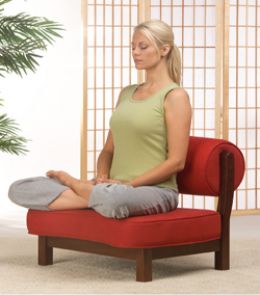
Sit in a comfortable chair with no loud distractions around you (relaxing music is fine)
Breathe deeply for thirty to sixty seconds. If you know any specific breathing techniques, use one that you like. Otherwise, just breathe naturally but deeply, but without trying to force the breath. Keep your eyes open and looking straight ahead, but keep the eyes relaxed.
Roll the eyes (not your head) downward so they are looking towards the floor in front of you. They are rolling downward, but comfortably. Don’t strain the eyes trying to look straight down; more like a 45-degree angle. Move the eyes slowly to the left, still downward towards the ground. Then move the eyes to the right. They are making a sweeping motion, like a spotlight.
Now move the eyes in one direction in a complete circle, trying to reach every spot in the circle. Then move them in a circle in the opposite direction. Continue breathing deeply in a relaxed manner.
Now tap the side of your hand tap with your dominant hand on the side of your other hand, in the area between the pinky and the wrist. This is sometimes called the ‘karate chop’ point. Use two or three fingers to tap with. You don’t have to count the taps. Tap firmly but not hard; just hard enough to feel the impact.
While tapping and breathing in a relaxed manner, think of something you would like to release or get rid of some emotional or physical condition that is causing you stress.
For example, if you are feeling stressful after an argument with your boss at work, tap while you say, either to yourself or out loud, something like, ‘I now release (or let go of) this anger (or whatever the feeling is) towards ___’ You can repeat this several times, and also vary the wording, however, seems appropriate.
This, again, is only an introductory exercise, but it will very likely make you realize that these techniques can really help.
Get Some Sleep for Losing Weight
This is another vast topic that I cannot get into in very much detail. Yet it is too important to leave out. Here is one of several instances where I feel like I’m writing something so obvious that it hardly needs saying.
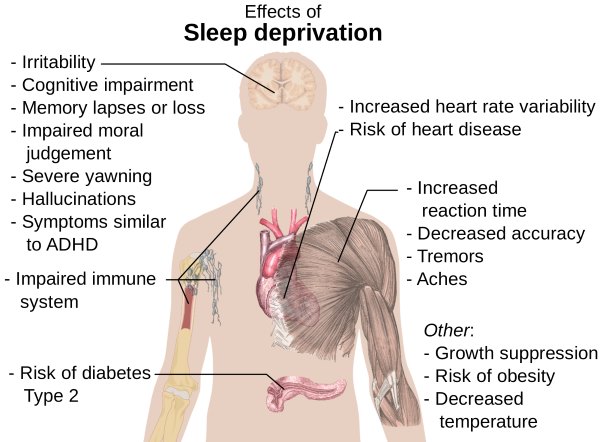 Yet, evidence suggests that it does need to be said, so here it is you have to get enough sleep. While insomnia is a problem for some, a more prevalent problem is people simply not placing enough value on sleep and skipping it.
Sleep Better, Lose Weight?
On the surface, it may seem strange that sleeping more would help you in losing weight. After all, we all know that you have to increase physical activity to lose weight, right? Yes, but it’s also true that recent research has shown a connection between sleep deprivation and obesity.
People who are sleep deprived tend to be over. A lack of sleep apparently causes an imbalance in your body’s metabolism and ability to burn fat. This, of course, is only one of many reasons you want to sleep well!
You cannot maintain optimum health and well being if you are consistently sleep-deprived. There is almost no justification (work, entertainment, study), no matter how seemingly important that is worth missing sleep over.
 I’m not talking about now and then, or during a special event or emergency; I mean every day, or several times per week. Many people simply leave sleep out of their schedule, and suffer the consequences without being aware of it.
They may get so used to feeling run down that they simply accept it as the way they feel.
If your schedule is chaotic, you may be able to divide your sleep periods or take a nap in the middle of the day.
The point is to get as much sleep as YOU need, whether that is 5, 6, 7, 8 or 9 hours. In the long run, leading a healthy lifestyle, minimizing stress and practicing techniques such as meditation may reduce your need for sleep.
Yet if you try to get by on less sleep than you need, you will only increase the amount of stress on your body and mind. So, even though this is a brief and basic piece of advice, please do not neglect it!
The Importance of Dreams
I’ll conclude the section on sleep with a brief mention of dreams. Dreams are a gateway to the vast unconscious portions of our minds.
Many people believe (as I do) that dreams connect us with other realms of reality. Whether you believe this or not, I think you should pay attention to your dreams. This is still another reason why a good night’s rest is important.
People who are sleep deprived often do not recall their dreams. Many find it helpful to keep a dream journal and to jot down anything you can remember immediately after waking up, as we tend to forget dreams quickly.
Another fascinating topic that would take me too far afield here is lucid dreaming, dreams where you know you are dreaming. If you are curious about this, I’d suggest doing some research into it. There are some good books and online resources available.
Conclusion to losing Weight For Good
Perhaps the most important fact I am trying to get across in this report is that feeling good and being healthy is not so much a matter of finding one perfect technique or supplement. It’s about connecting all the dots and changing your whole perspective.
All of the particular ideas, techniques and foods I have written about are related to each other and work best as part of an overall system. Your thoughts tend to be more positive when you eat better and breathe more deeply. Conversely, when you are thinking and feeling well, you digest your food more smoothly and sleep better.
So, while I most certainly encourage you to seek more information about many of the things I’ve mentioned, the real point is that you are a whole system.
Having what might be called a meta-program of well being is more important than what particular systems, facts or products you decide to pursue. Whatever your choices, I wish you well. All of these parts will work as a whole to losing weight.