In one of the most rigorous studies ever conducted to determine how well people comprehend the information provided on food nutrition labels, researchers have found that the reading and math skills of a significant number of people may not be sufficient to extract the needed information, according to an article published in the November issue of the American Journal of Preventive Medicine.
So after seeing that report and of course precious little on what the problems really were that people had trouble with I thought I would pull out a box of Honey Nut Cheerios (They are for the kids, really I am not just right now popping them in my mouth as an evening snack) and a box of Kelloggs All Bran and am going to try to decipher what the lies are on the labeling.
Whether printing labels for business purpose, or for personal address labels, choosing quality label manufacturers to print the labels will ensure they are going to be made with quality materials, and will offer a great look and finish. Depending on how many labels must be printed, the design and style you want printed, and the budget that you have set to print out the labels, are all factors to consider when choosing the label manufacturers to make the labels for cards, letters, memos, or for any other use. You can click here learn more about the Quality Control & Quality Assurance label. When choosing the food verification to use for services, considering a quality Eat & Drink Site, which will do the job for an affordable rate is something that should be considered prior to choosing the verification for services. Your labeling system is a critical part of the manufacturing process. A good labeling system can churn out high quality labels quickly, while a poor one can be an absolute nightmare. Here are some of the most important factors that go into a high quality labeling system. Therefore, knowing how many labels you need printed, the quality, the look, and the design that you want printed, are all things to consider when deciding on the labels to have printed, and which label manufacturers to use for the services. Also, depending on the amount of labels being printed, the cost per label is going to vary, depending on whether it is being placed in a bulk order, or if other items are being ordered along with the labels.
A List of Food Labeling Lies
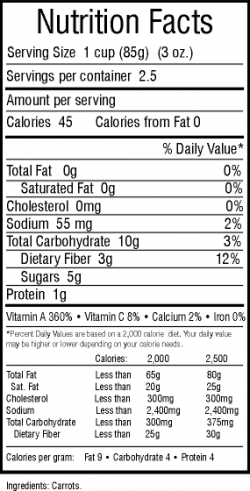 1. First of all we all need to know that labels lie. The best example of lying on labels is that PAM cooking spray is low in fat….It is all fat folks but the “serving size” is so low in actual grams of fat that the company can call it fat free or some ridiculous thing.
2. Serving Size – This is dumb but on the Honey Nut Cheerios it says that a serving is 3/4 of a cup or 30 grams I think because they want to use the fact that it is only 110 calories a serving (without milk, I tried to eat my cereal this morning with water instead and it was terrible), my Kelloggs All Bran says that a serving is 1/2 cup which is actually 36 grams. The difference in this case is that the All Bran wants to use the number of 12 grams of Fiber per serving so they decided that I should eat a half cup as a serving (I really eat about a cup instead in real life).
3. % Daily Value – Here is the worst part of the food labeling. There is a percentage Daily Value for Fat, Carbs, Cholesterol, Sodium and even Saturated and Trans fats but the numbers are not broken down on the box. Am I to assume that it is for and average sized man? Average sized Woman? It is a kids cereal so is it for a kid? What if you are following Atkins? Or the Zone Diet? How does this compare to Weight Watchers point values? I am really serious about this, as I look around the box no where does it say who and what kind of diet this is based on.
4. Percentages of Micronutrients – Here in Canada there is more stuff on the food label.There are also on this food label fifteen essential nutrients. These nutrients include such Vitamins and Minerals as Vitamin A, Vitamin C, Calcium, Iron, Vitamin D, Thiamine, Riboflavin, Niacin, Vitamins B6 and B12 (the un named B vitamins), Folate, Pantothenate, Phosphorus, Magnesium and Zinc and also display percentages of value using the secret code but I am under the impression that there is no real way to measure how much folate I need, how much is borderline deficient and how much is dangerously high. I think the jury is really still out on how much of each of these nutrients that we really need for sure.
5. Finally the food label on the bottom tells us what the product is actually made of. I am not sure why, but most of the parts of a lot of foods are unknown chemicals to most people. We have often heard that if you can not pronounce the ingredient then it is probably bad for you but I am not sure if that is really true and would love to know more about this.
6. Missing stuff – The one thing that I do see on one label and not the other is that there may be traces of nuts. As the father of a school aged child I know that many people have issues with nut allergies and there are other allergies such as Gluten and lactose that we only hear a little bit about but I can imagine those parents must pull their hair out trying to figure out whether a food is OK or not. I would love to se the food labels be a lot better at mentioning these things in the future.
I am sure that the FDA and the big food companies will never see this blog post but really I am sure I am not alone in wondering why food labeling is so bad in a society where people have to be careful of what we eat but hopefully as more people pay attention we will se changes to product labeling that will allow us to make more healthy and better decisions of what we should and can be eating.